
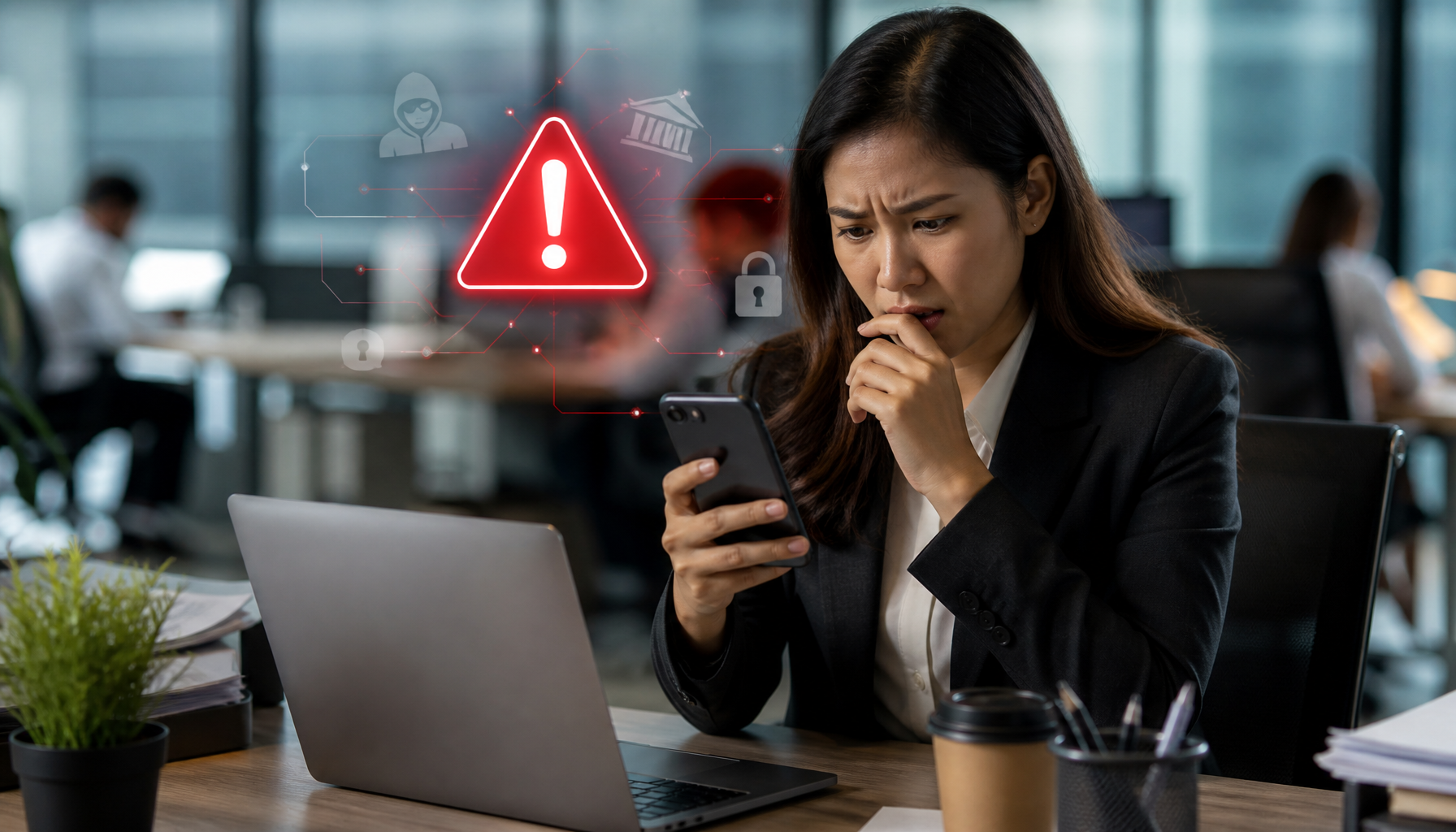
WhatsApp scams Malaysia: office workers across KL, Selangor and Penang now receive fake WhatsApp messages almost weekly — a ‘bank officer’ flagging your account, a ‘courier’ chasing a delivery fee, or a ‘boss’ urgently requesting a transfer. This guide explains how these scams work and exactly what to do before you tap that link.
Your phone buzzes during lunch. The message looks like it comes from your bank, complete with a logo profile picture. It says your account has been flagged and you must verify your details within 30 minutes. It feels urgent. That urgency is the weapon.
This pattern is showing up on the personal and company phones of admin staff, finance executives and HR personnel across Malaysian offices. Once you understand the playbook, these messages become much easier to catch.
WhatsApp Scams Malaysia: Why Office Staff Are the Target
Scammers prefer office staff for a simple reason: you handle money and information on someone else’s behalf. A finance executive who pays vendor invoices, an admin who arranges couriers, or an HR officer who holds employee data is more valuable than a random individual. A common pattern across Malaysian SMEs is a message impersonating a supplier with ‘updated bank details’ just before a real payment is due.
The Three Most Common Scam Patterns
The fake bank alert claims your account will be suspended and links to a login page that steals your credentials. The fake courier message, often using Pos Laju or J&T branding, asks for a small ‘redelivery fee’ to harvest your card details. The fake boss scam copies your manager’s name and photo, then requests an urgent transfer or the purchase of gift cards while they are ‘in a meeting’. All three rely on pressure and a short deadline.
How to Verify Before You Tap
Most WhatsApp scams Malaysia offices encounter can be stopped with one habit: slow down and check the actual phone number, not the display name — banks in Malaysia do not request verification through WhatsApp. Call the person or company back on a number you already have, never the one in the message. For payment changes, confirm by voice with the supplier on their known office line. You can also check suspicious account numbers on the police’s Semak Mule portal at semakmule.rmp.gov.my before any transfer.
What to Do If Someone in Your Office Already Clicked
Act in the first hour. Contact your bank’s fraud hotline immediately to freeze the transaction, change the affected passwords from a different device, and report the incident to the National Scam Response Centre at 997 or to Cyber999 via MyCERT. Then inform whoever looks after your office IT so they can check whether anything was installed on the device and reset company account access.
Frequently Asked Questions
How do I recognise a WhatsApp scam in Malaysia?
Look for urgency, a deadline, a link, or a payment request from an unverified number. Genuine Malaysian banks, LHDN and courier firms do not ask for logins, TAC codes or fees through WhatsApp.
Should the scam number be blocked and reported?
Yes. Block the number, report it inside WhatsApp, and share a screenshot with colleagues — scammers usually target several staff in the same company within days.
Can a small office protect itself without an IT department?
Yes. A short verification rule — any payment or detail change must be confirmed by phone call — stops most scams. Periodic staff awareness reminders and basic device security complete the picture.
WhatsApp scams Malaysia-wide are not going away, but a prepared office is a hard target. Servcom Solutions helps Malaysian SMEs put practical protections in place, from staff security awareness to network and device security. If your team wants a second pair of eyes on its setup, reach out at www.servcom.my/contact.