
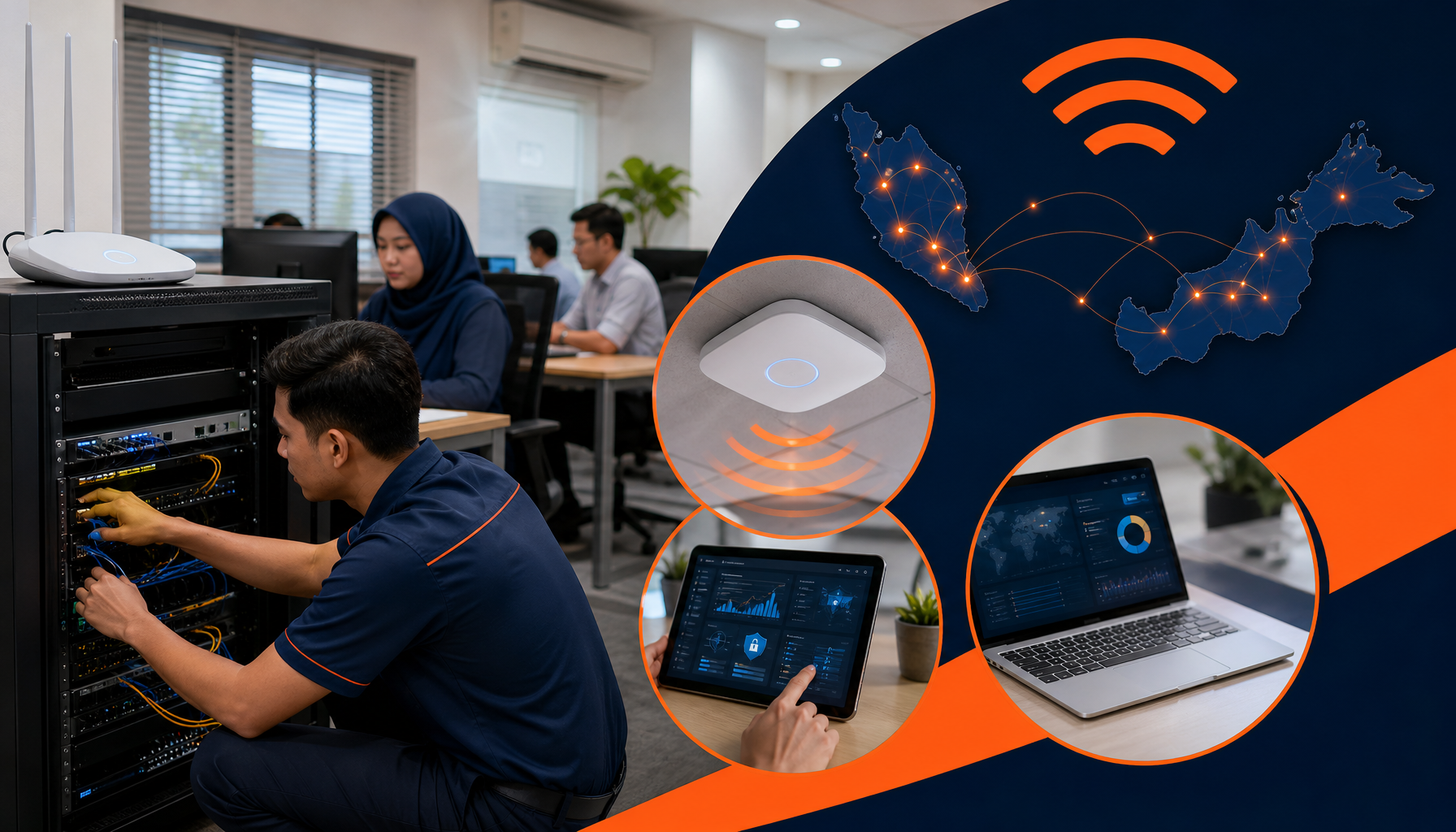
Field support dispatch coordination is one of the most pressure-sensitive parts of running a multi-country IT deployment across Asia Pacific. When you have hardware arriving at a branch in Manila, a cabling crew scheduled in Bangkok, and a rack installation pending in Jakarta, the margin for scheduling error is very small. This post covers four patterns that consistently determine whether a field dispatch goes smoothly or compounds into a larger problem.
Regional IT directors and project managers deal with a specific operational reality: most of their sites have no resident IT staff. When something needs to happen physically on-site — a switch swap, a patch panel termination, a UPS replacement — someone has to get there. Flying an engineer from headquarters is expensive and slow. Using a local provider without clear coordination standards introduces its own risks.
How Does Field Support Dispatch Actually Work Across Multiple Countries?
Field support dispatch across APAC typically involves a mix of resident engineers, partnered local providers, and smart hands teams embedded in or near data centres and commercial buildings. The coordination layer is where most regional IT teams struggle. Each country has different site access procedures, different lead times for hardware customs clearance, and different expectations around engineer certification levels.
A common pattern across the region is that the project manager in Singapore or Kuala Lumpur has a detailed deployment plan, but the engineer arriving on-site in Ho Chi Minh City or Seoul has received only a fraction of that information. Scope gaps at the site level are a consistent source of delay. Structured pre-dispatch briefings — including rack diagrams, labelling conventions, escalation contacts and acceptance criteria — close most of these gaps before they become incidents.
Hardware Staging and Logistics Timing
Field support dispatch is only as reliable as the hardware that precedes it. In multi-country rollouts, hardware arriving at a site after the engineer does is one of the most common causes of wasted dispatch costs. Import duties, courier delays and local customs holds in countries like Indonesia and the Philippines can push delivery timelines well beyond the original estimate.
Building buffer into the hardware leg of your deployment schedule — and confirming physical receipt before confirming the engineer booking — prevents the scenario where a skilled technician spends three hours on-site waiting for a shipment that clears customs the following day. For hardware sourcing and staging support across Malaysia and the region, hardware procurement and repair services that understand cross-border logistics are worth integrating into the deployment plan early.
Site Access and Vendor Coordination Across APAC
Building management procedures in commercial towers across Bangkok, Jakarta and Manila vary considerably. Some require 48 to 72 hours advance notice for contractor access. Others require proof of insurance, engineer ID verification or escorted entry. Assuming that access procedures in one country mirror those in another is a reliable way to lose a dispatch day.
Experienced field support dispatch teams carry site access checklists that are country- and building-specific. If you are working with a regional provider, confirm that their local teams have existing relationships with building management at your target sites. That relationship often determines whether a job starts on time. The Cisco field services framework outlines how tiered field support models handle these coordination layers at scale — useful reference when structuring your own vendor requirements.
Frequently Asked Questions
What should a field support dispatch brief include?
A solid field support dispatch brief covers the physical scope of work, a rack or floor diagram, labelling and cable colour conventions, the escalation contact chain, site access instructions specific to that building, and the acceptance criteria the engineer needs to meet before leaving site. Sending this at least 24 hours before dispatch reduces on-site ambiguity significantly.
When does it make sense to use smart hands instead of flying an engineer?
Smart hands are the right call when the task is well-defined and does not require senior-level troubleshooting — think cable runs, hardware racking, device swap-outs or KVM-guided configuration. For sites in Singapore, the Philippines, Indonesia or Thailand, smart hands services offer faster mobilisation and lower cost than cross-border travel, particularly for tasks under eight hours.
How do you maintain deployment consistency across different countries?
Consistency comes from standardised documentation and a single coordination point managing all field dispatch across the region. Using country-specific engineers without a common briefing template produces variable results. A regional IT project management layer — one team that owns the scope, the schedule and the vendor relationships — is what keeps standards consistent from Kuala Lumpur to Seoul.
Servcom Solutions supports field support dispatch across Malaysia and APAC, including field support in the Philippines and wider regional deployments managed through its IT project management team. If you are planning a rollout across multiple countries and need coordinated on-site execution, contact Servcom at www.servcom.my/contact-us/.