
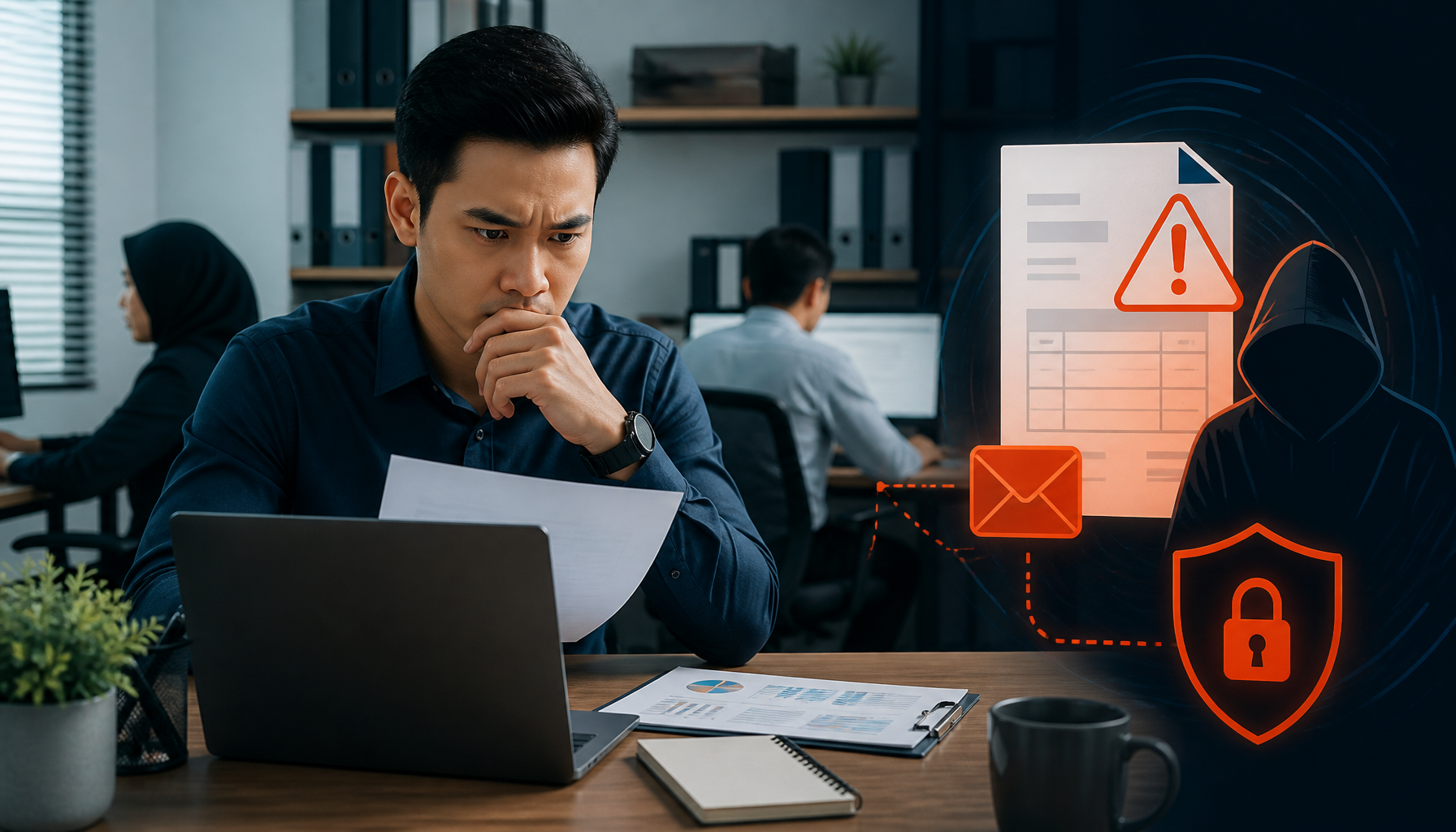
A fake invoice scam is one of the most common ways Malaysian office staff get tricked into sending money to fraudsters — and it works because the emails look completely normal at first glance. This post covers the warning signs you should know, why these scams are so convincing, and what to do if something feels off. Knowing what to look for can protect your company from losing thousands of ringgit in a single click.
Think about a typical Tuesday morning in your office. An email lands in your inbox from what looks like a regular supplier, asking you to process an invoice before end of day. The amount seems right, the logo looks familiar, and you are busy. That is exactly the moment scammers count on — when you are in a rush and not looking too closely.
What Makes a Fake Invoice Scam So Hard to Spot?
Scammers who run a fake invoice scam put real effort into making their emails look legitimate. They copy your supplier’s logo, use similar email addresses, and even reference real invoice numbers they have gathered from earlier correspondence. The email might come from an address like ‘billing@your-supplier-my.com’ instead of ‘billing@yoursupplier.com.my’ — one small difference that is easy to miss when you are scanning quickly.
In Malaysia, these scams often target finance and admin staff at SMEs because smaller companies sometimes have fewer layers of approval before a payment goes out. Scammers know this. If your company processes supplier payments regularly, your team is already on their radar.
5 Signs the Invoice in Your Inbox Is Not Genuine
First, check the sender’s email address carefully — not just the display name, but the actual address behind it. A display name can say anything, but the real address will usually show the mismatch. Second, look for a sudden change in bank account details. Legitimate suppliers rarely change their banking information without a prior phone call or formal letter. Third, watch for unusual urgency — phrases like ‘payment required today or services will be suspended’ are pressure tactics designed to stop you thinking clearly.
Fourth, hover over any links in the email before clicking. If the web address that appears looks strange or does not match the supplier’s website, do not click it. Fifth, compare the invoice to previous ones from the same supplier. Differences in font, layout, invoice numbering or contact details are red flags worth taking seriously. When in doubt, call the supplier directly using a number you already have saved — not the number printed on the suspicious invoice itself.
How Should You Report a Suspicious Email?
If you receive an email that looks like a fake invoice scam, do not delete it straight away. Forward it to your IT person or manager first so they can check it properly. In Malaysia, you can also report suspicious emails and scam attempts to MyCERT at mycert.org.my, which is run by CyberSecurity Malaysia and tracks online threats affecting Malaysian businesses. Reporting helps protect other companies too.
Your company should also have a clear process for verifying any invoice that asks for payment above a certain amount, or any invoice that comes with new banking details. If that process does not exist yet, now is a good time to ask for one. A simple two-person check before any transfer is approved can stop most of these scams cold.
Frequently Asked Questions
How do I know if an invoice email is a fake invoice scam?
Look at the sender’s actual email address rather than just the display name, and compare the invoice to previous ones from the same supplier. Any change in bank account details or unusual urgency to pay quickly are strong warning signs. When unsure, always call the supplier on a number you already have on file.
What should I do if I already paid a fake invoice by mistake?
Contact your bank immediately to try to stop or reverse the transaction — speed matters here. Then inform your manager and IT team straight away. You can also report the incident to MyCERT and the police. Many banks in Malaysia have fraud teams who handle these cases and may be able to recover funds if you act fast enough.
Are small Malaysian companies really targeted by invoice scams?
Yes, and quite frequently. Scammers often target SMEs precisely because smaller offices tend to have fewer approval steps before a payment is made. Finance and admin staff at companies in Selangor, KL and across Malaysia receive these emails regularly. Being aware of the warning signs is the most practical protection available to any office team.
Staying alert to a fake invoice scam is something every person in your office can do, regardless of their technical knowledge. Simple habits — checking email addresses, calling to verify, never rushing a payment — make a real difference. If your company needs help reviewing its IT security practices or setting up better protections for staff, Servcom Solutions at IT support services can assist, and the team is based right here in Shah Alam, Selangor. Reach out at www.servcom.my/contact to start a conversation.