
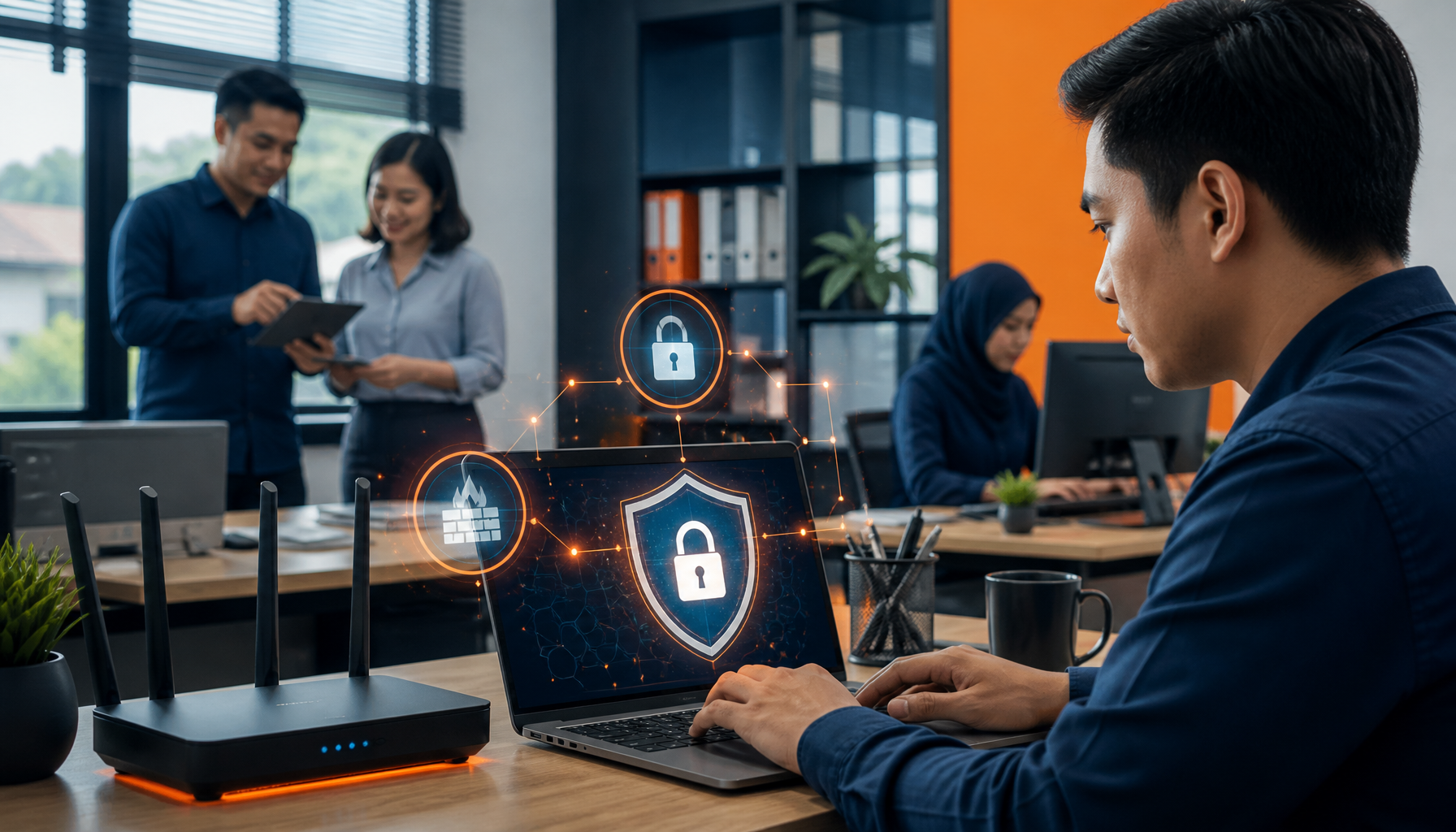
Cybersecurity basics for Malaysian SMEs cover the practical steps small and medium businesses can take to protect their data, systems and staff from increasingly common digital threats. Getting these fundamentals right reduces your exposure significantly without requiring a large IT budget.
Many SME owners in KL, Selangor and Penang assume that hackers only target large corporations. In reality, smaller businesses are frequently targeted precisely because their defences tend to be weaker. A single compromised account or unpatched device can bring operations to a standstill.
The good news is that the most effective protective measures are not complicated. They require consistent habits and a few deliberate decisions about how your business manages access, data and devices.
Why Weak Passwords and Shared Accounts Still Cause Most Breaches
Across Malaysian SMEs, one of the most common cybersecurity basics failures is poor access control. Staff sharing passwords, using simple combinations like company names and birth years, or never changing default credentials on routers and systems — these habits create easy entry points for attackers.
Every user account should have a unique, strong password. A password manager makes this practical for teams without technical training. Multi-factor authentication, where you confirm your login with a second step such as a code sent to your phone, adds another layer that stops most automated attacks even if a password is compromised.
Account access should also be reviewed regularly. When a staff member leaves, their accounts should be disabled immediately. Many breaches traced back to SMEs in Malaysia involve credentials that were never deactivated after someone resigned.
How Does Keeping Software Updated Actually Protect Your Business?
Cybersecurity basics include keeping your operating systems, applications and network devices updated. Software updates frequently contain security patches that close known vulnerabilities. Attackers actively scan for businesses running outdated versions of common software, because those vulnerabilities are publicly documented and easy to exploit.
This applies to your office computers, your servers, your firewall and even your managed switches. A device running old firmware on your network is a potential entry point. Network management that includes regular patch schedules significantly reduces this risk.
The MyCERT portal, maintained by CyberSecurity Malaysia, publishes active advisories on vulnerabilities affecting common software used by Malaysian businesses. Checking it periodically is a straightforward habit that costs nothing.
Backups: The Cybersecurity Basic That Saves Businesses After an Attack
Ransomware attacks, where criminals encrypt your files and demand payment to restore access, have become more common across Malaysian SMEs. The most effective defence against ransomware is a reliable, tested backup system. If your data is backed up correctly, you can restore operations without paying anything.
A working backup strategy follows the 3-2-1 rule: three copies of your data, stored on two different types of media, with one copy kept offsite or in cloud storage. Many SMEs have backups in name only — files copied to an external drive that sits next to the computer, or cloud sync that mirrors deletions immediately. Neither protects you adequately.
Backups should be tested regularly to confirm they actually restore correctly. An untested backup is not a backup — it is an assumption. Your IT support services provider should be verifying this on a scheduled basis.
Frequently Asked Questions
What are the most important cybersecurity basics for a small business in Malaysia?
The most important cybersecurity basics for Malaysian SMEs are strong, unique passwords with multi-factor authentication, keeping all software and devices updated with security patches, and maintaining tested offsite backups. These three measures address the majority of common attack vectors without requiring a large IT investment.
How often should a small business review its cybersecurity basics?
A practical approach is to review your cybersecurity basics at least once every quarter. Check that all user accounts are still active and necessary, confirm backup restores are working, and verify that devices and software are up to date. An annual review alone is not frequent enough given how quickly threats evolve.
Do Malaysian SMEs need a dedicated IT team to handle cybersecurity basics?
Most Malaysian SMEs do not need a full-time internal IT team to maintain cybersecurity basics. A managed IT support provider can handle patching schedules, network monitoring and backup verification on an ongoing basis, which is typically more cost-effective than hiring in-house staff for smaller operations.
Servcom Solutions, based in Shah Alam, helps Malaysian SMEs put these cybersecurity basics in place without overcomplicating the process. Whether your office is in KL or anywhere else in Malaysia, practical guidance is available at www.servcom.my. To talk through your current setup, reach out via the Servcom contact page.